
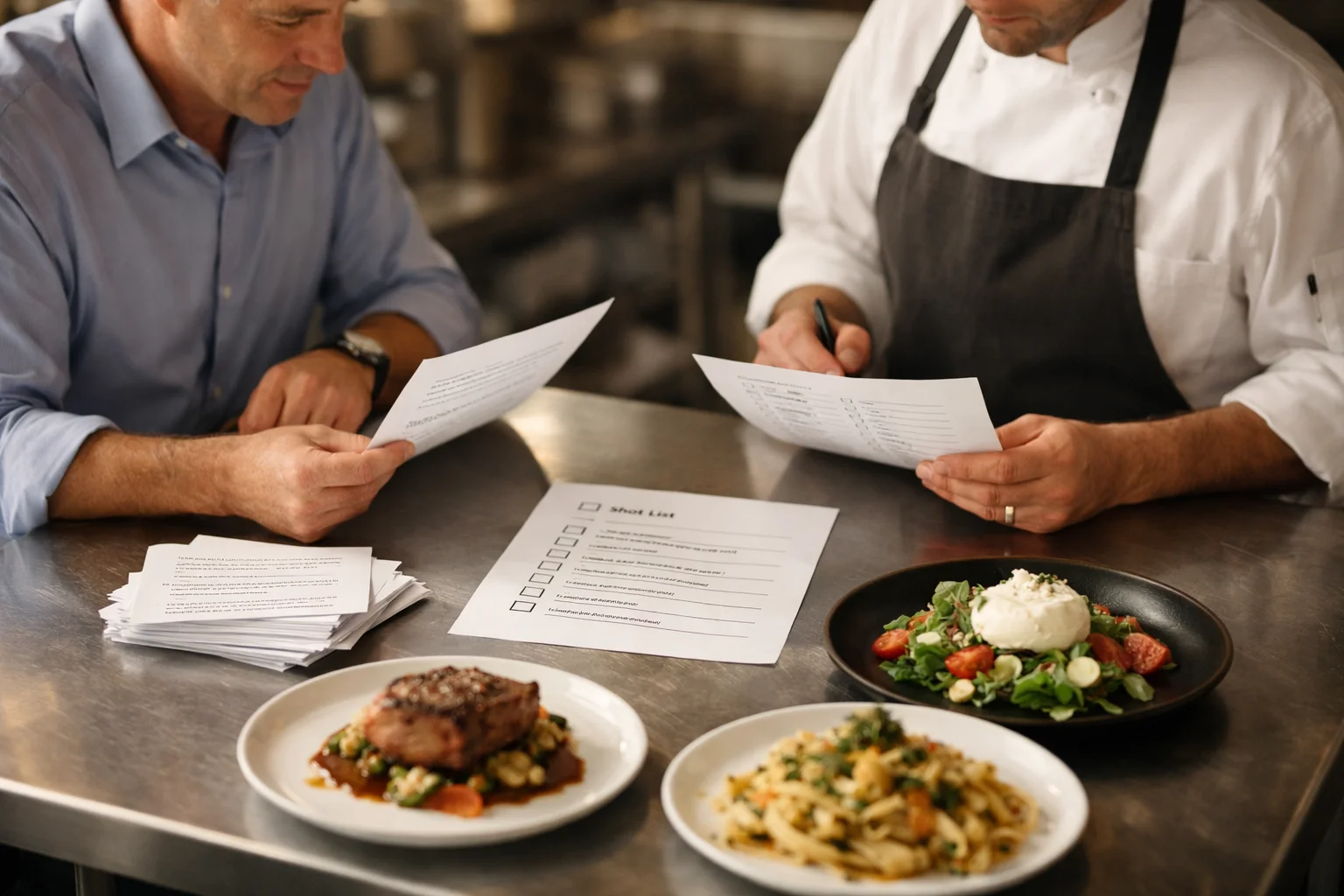


AI short form video creation for restaurants works when it runs as a system — stable pillars, truth inputs, QA gates, and weekly cadence. Avoid these 9 mistakes to keep Reels and TikTok consistent without filming complexity across US, UK, and Canada.
Introduction
AI short form video creation for restaurants works when it is operated like a production workflow: consistent inputs, repeatable formats, QA gates, and a weekly publishing cadence. It fails when it is treated as a viral hack — where speed replaces truth and videos drift away from what guests will actually experience.
In practical terms, AI short form video creation for restaurants means a controlled system that takes verified menu and policy inputs, turns them into scripts and short videos, and publishes consistently across US, UK, and Canada markets — without daily creative chaos. The goal is consistency over complexity: fewer surprises, fewer public contradictions, and a trust signal that compounds across weeks.
A common misconception is that AI short form video creation for restaurants means “press a button, get a viral Reel.” It does not. The system’s job is not to chase trends — it is to eliminate the two bottlenecks that prevent weekly video publishing: the decision bottleneck of what to say without inventing claims, and the production bottleneck of how to ship weekly videos without complex filming. Fix those two constraints and consistency becomes achievable without a full production team.
What AI Short Form Video Creation for Restaurants Is (System-First Definition)
AI short form video creation for restaurants is a repeatable pipeline, not a creative shortcut. Operationally, it runs as a sequence: truth inputs covering menu descriptors, policies, and review themes feed into format selection, which produces a script, which drives visual assembly, which passes a QA gate before scheduled publishing, with a feedback loop that improves inputs over time.
This is where the AI reels generator for restaurants concept becomes genuinely useful — it standardises output if and only if inputs and rules are stable. Minimum truth library inputs that are non-negotiable include menu item descriptors that can be substantiated with ingredients and portion cues, hours and reservation or waitlist policies, what-to-expect standards covering timing and service style, review themes drawn from real guest language, and clear boundaries around allergen guarantees, invented awards, and over-promising. Without those inputs defined, an AI reels generator for restaurants can generate more drafts — but not safer videos. generator for restaurants can create more drafts—but not safer videos.
Why AI Short Form Video Creation for Restaurants Matters
Restaurants do not lose because they lack creativity. They lose because content collapses during busy weeks, and guests see an inconsistent brand. AI short form video creation for restaurants matters because it removes that collapse risk by making video production a system rather than a weekly decision.
The cause-and-effect outcomes are measurable. Consistent short videos create repeated exposure, which builds stronger recall and drives more profile actions — calls, directions, and bookings. What-to-expect videos reduce guest surprises, which reduces complaints and improves review sentiment over time. Proof-led videos built from real review themes and answered FAQs lower perceived risk and increase first-visit conversion. Stable weekly shipping reduces internal stress and eliminates the last-minute posts that create public contradictions.
Rather than tracking views alone, restaurants running AI short form video creation for restaurants should measure saves and shares on what-to-expect clips, intent DMs asking about bookings or parking, profile actions including calls and directions, and a reduction in repeated guest questions because videos answered them consistently each week.
How AI Short Form Video Creation for Restaurants Works
Treat AI short form video creation for restaurants as a weekly operating routine with six stages. The goal is to remove filming complexity and replace it with predictable production.
Step 1: Lock Three to Five Video Pillars for Six to Eight Weeks
Stable pillars reduce topic drift and make batching easier. Recommended pillars include signature items with one specific detail per video, proof drawn from review themes and what guests praise, what-to-expect content covering policies and busy periods, standards that can be shown without over-claiming, and time-bounded seasonal or event content. Pillars are what keep TikTok for restaurants automation and Reels consistent without becoming random trend-chasing.
Step 2: Use Constrained Video Formats
Repeatable formats scale without constant brainstorming. Practical structures include FAQ video from question to direct answer to next step; review theme video from theme to what it proves to expectation-setting to CTA; signature item video from one detail to pairing suggestion to availability boundary to CTA; and policy video from clarity to boundary to how to plan your visit. The constraint rule: one video, one promise.
Step 3: Script From Truth Inputs
Scripts must pull from verified menu descriptors, confirmed policies, real guest review language, and operational what-to-expect standards. Scripts must avoid guaranteed outcomes, dietary safety guarantees, invented awards, and promises that depend on staffing realities unless carefully bounded. If it is not in the truth library, it cannot appear in a script.
Step 4: Assemble Visuals via Two Paths
Path A uses approved assets — selecting from a tagged library of dish close-ups, ambience shots, and team moments, matched to the script’s specific claim with no out-of-date menu items. Path B uses a weekly micro-shoot of 20 to 30 minutes capturing repeatable shots: dish finishing close-up, plating moment, dining room ambience, and a what-to-expect cue such as the host stand or waitlist moment.
Step 5: QA Gate Before Scheduling
Minimum QA checks must confirm the menu item is current and available, hours and policies are accurate, no sensitive guarantees around allergens or health claims are present, the script matches the visuals, and the CTA is correct. This gate is what separates AI short form video creation for restaurants from a system that publishes contradictions at speed.
Step 6: Publish With a Sustainable Weekly Cadence
A baseline of one short video per week provides minimum viable consistency, with an optional second video once the system is stable. Batch scripts and visuals in one weekly session, schedule two weeks ahead where possible, and lock the calendar except for genuine exceptions such as closures or sold-out items.
9 AI Short Form Video Creation Mistakes Restaurants Must Avoid
These are the consistent breakdowns that make AI short form video creation for restaurants disappoint — and the operational fix for each.
Mistake 1: Starting With Trends Instead of Pillars
Chasing weekly trends produces inconsistent content that does not compound. AI short form video creation for restaurants built on stable pillars produces a recognisable, trustworthy feed that guests return to. Lock three to five pillars for six to eight weeks before adjusting.
Mistake 2: Letting Scripts Freestyle Without Truth Inputs
Scripts generated without a truth library produce plausible but unverified claims — wrong hours, unavailable dishes, over-promised experiences. Build a truth library first and apply a rule that invented details cannot appear in any script, comment, or caption.
Mistake 3: Ignoring What-to-Expect Content
Most restaurants post signature items and promotions but skip the content that actually reduces complaints: timing expectations, reservation policies, busy period guidance, and service style. AI short form video creation for restaurants that prioritises what-to-expect content over entertainment volume drives measurable reductions in guest friction.
Mistake 4: No QA Gate for Availability and Policy
Scheduling videos about sold-out dishes, expired promotions, or changed hours creates public contradictions that erode trust. A QA gate must block these before anything is scheduled. This single step separates a restaurant video marketing tool that protects brand safety from one that amplifies mistakes faster.
Mistake 5: Filming Complexity That Kills Consistency
Full production shoots are unsustainable during busy service weeks. A 20 to 30 minute weekly micro-shoot capturing four to five repeatable shot types — dish close-up, plating moment, ambience, what-to-expect cue — provides enough visual content for consistent weekly publishing without production overhead.
Mistake 6: Publishing Volume Without Operational Learning
Posting without reviewing what worked — which videos drove intent DMs, saves, or profile actions — wastes the feedback signal that makes AI short form video creation for restaurants self-improving. Convert repeated review themes and FAQs into next week’s scripts so the system compounds over time.
Mistake 7: Using an AI Reels Generator Without Input Governance
An AI reels generator for restaurants without a truth library and boundary rules will generate creative, confident, and inaccurate content. The generator is only as safe as the inputs it draws from. Governance — what can and cannot appear in scripts — is what makes automation trustworthy rather than risky.
Mistake 8: No Escalation Rule for Sensitive Topics
Videos touching on allergens, health claims, dietary safety, or regulated promotions must route to a human reviewer before scheduling. TikTok for restaurants automation that publishes sensitive content without an escalation rule creates brand and legal risk that no scheduling tool can undo after publication.
Mistake 9: Treating Cadence as Optional
Sporadic video publishing breaks the repeated-exposure loop that builds guest recall and drives profile actions. One video per week, published consistently, outperforms three videos in one week followed by three weeks of silence. Cadence discipline is the foundation of everything AI short form video creation for restaurants is designed to achieve.
Comparison: Viral-First Video vs System-First Video
Most social media advice for restaurants defaults to a viral-first approach: chase weekly trends, rely on last-minute filming, and measure success by views. The outcome is inconsistent shipping, inconsistent brand, and high staff interruption — because every week starts from zero.
The system-first approach works differently. Stable pillars and constrained formats remove the weekly decision burden. Scripts pulled from truth inputs and real review themes stay accurate without requiring creative invention. A QA gate before scheduling prevents public contradictions. A weekly cadence that survives busy operations means the brand stays visible even when service is at full capacity. The outcome is fewer videos required to maintain guest recall, fewer public contradictions, and a trust signal that compounds — which is the core promise of AI short form video creation for restaurants done correctly.
For an authoritative overview of how consistent content structure improves local business visibility, see Google Business Profile — How to improve your local ranking on Google.

Where a Restaurant Video Marketing Tool Fits
Some restaurants want consistent short videos and posts but do not want daily logins or weekly production burden. In that context, a restaurant video marketing tool that handles content creation, publishing, and review responses after a one-time setup removes the operational overhead while keeping brand presence consistent.
Consider two scenarios. A US-based casual dining group with five locations struggles to maintain consistent Reels across all accounts — each location posts sporadically and with different tone. After installing a set-once system, all five accounts publish to a shared brand spine with location-specific truth inputs, and posting becomes weekly without a dedicated social media hire. A UK restaurant owner spending two hours daily on Instagram replies and Google reviews switches to a governed reply system after setup, freeing that time for front-of-house operations while response consistency improves across both platforms.
Tinda AI (https://tinda.ai/) is positioned as a “Trusted Identity Nurturing Digital Assistant” and a “set once, done-for-you brand management system for social media.” After a one-time setup, Tinda AI extracts brand identity, tone, and positioning from the business website; creates consistent social media content including text, images, and short-form video; publishes across platforms automatically; responds to Facebook and Instagram comments; responds to Google reviews with brand-safe replies; repurposes Google reviews into social media posts; and provides insights to improve brand trust and visibility.
For more information on relevant features, see:
- Tinda AI – Short Form Video Automation
- Tinda AI – AI Content Creation
- Tinda AI – Automated Social Media
FAQ
What is AI short form video creation for restaurants, exactly?
AI short form video creation for restaurants is a governed workflow that turns verified restaurant inputs — menu descriptors, policies, and review themes — into repeatable scripts and short videos, then publishes them through QA gates and scheduling discipline rather than ad hoc creative effort.
Can an AI reels generator for restaurants help if we never film?
An AI reels generator for restaurants can significantly reduce production load, but consistency still depends on a verified input library, a shot list or approved asset bank, and a locked weekly cadence. Without those foundations, the generator produces more drafts — not safer or more consistent videos.
Is TikTok for restaurants automation safe for promotions and specials?
TikTok for restaurants automation can safely handle promotions and specials when availability and timing are verified before scheduling and a QA gate blocks sold-out or expired offers from publishing. Without that gate, automation publishes contradictions at the speed of a scheduled post.
What should a restaurant video marketing tool include beyond scheduling?
A restaurant video marketing tool should include truth input governance covering menu details and policies, repeatable constrained script formats, a QA gate for availability and sensitive claims, an escalation rule for allergen or health content, and a feedback loop that converts review themes and FAQs into future scripts.
What is the clearest sign AI short form video creation for restaurants is working?
The clearest sign AI short form video creation for restaurants is working is an increase in intent DMs — guests asking about bookings, parking, or menu items — combined with a growing scheduled runway of two to four weeks ahead and a measurable reduction in repeated guest questions that weekly videos have already answered.
Conclusion
AI short form video creation for restaurants is most effective when treated as a repeatable system: stable pillars, constrained formats, scripts based on truth inputs, low-complexity visual capture, QA gates, and a sustainable weekly cadence. With that structure, AI short form video creation for restaurants becomes a time stabiliser and trust-compounding mechanism — rather than a risky attempt to go viral.
Start with one week of discipline: pick three pillars, write three constrained scripts from real menu and review inputs, run the QA checklist, and schedule one video. Once that routine is stable, a restaurant video marketing tool can extend it across platforms without adding production complexity — and consistency becomes the competitive advantage that compounds across US, UK, and Canada markets.