


TikTok views can spike yet still damage trust. Avoid these 7 costly mistakes with a brand-safe workflow for consistent replies, clear boundaries, and reputation-safe short videos for US, UK, and Canada businesses.
Introduction
For small business owners and founders in the US, UK, and Canada, TikTok views are easy to chase and easy to misread. A video that accumulates significant views in the first 48 hours can feel like a marketing win — but if the comment thread below it shows inconsistent replies, unclear offer terms, and staff members giving different answers to the same question, those views are not building trust. They are building a larger audience for the inconsistency the brand was already producing.
The practical goal for a small business is not viral reach. It is predictable trust: viewers understand what the business does, comments stay coherent and consistent, and review responses reinforce the same standards that the video content was designed to project. When those three things are aligned, TikTok views translate into enquiries, bookings, and repeat customers. When they are not, high-view videos produce high-volume comment management problems that consume more founder time than the reach is worth.
A common misconception is that a spike in TikTok views fixes unclear positioning. It does not. Viral attention brings a wider audience that asks more qualifying questions — and that is precisely where inconsistency becomes most visible. When a video implies same-day availability without stating the boundary, the comment thread fills with timing and service-area questions. When different staff members answer those questions with slightly different versions of the terms, the thread becomes public evidence of a brand that cannot give a consistent answer to a basic question. Future prospects reading that thread before making contact experience the inconsistency as a reliability signal, not as a minor administrative oversight.
The fix is a governed short-form content workflow: one clear theme per video, one visible boundary when the topic could be misunderstood, one proof point drawn from real customer experience, and two approved reply lines prepared before the video goes live. With that structure, every video and every comment thread reinforces the same brand record rather than creating new versions of the promise that staff must later defend in public. This article is part of the broader challenge of consistent brand management for small businesses — covering social media consistency, reputation management, and done-for-you publishing — because short-form visibility only helps when the public brand record stays consistent.
What TikTok Views Mean for Small Business Trust
TikTok views are the count of times a video is watched on the platform — a visibility signal that reflects how many people the content reached rather than how many people understood what the business offers or felt confident enough to act on what they saw. For a small business, the practical outcome that matters is not the view count itself. It is the conversion chain: view → understanding → inquiry → booking or purchase. Every step in that chain depends on clarity, consistency, and the reply behaviour the business demonstrates in the comment thread beneath the video.
The practical definition is this: TikTok views are a visibility signal, not a trust guarantee. Trust grows when a video sets clear expectations and the business replies consistently in public comments and reviews. A video that generates high views from curiosity while creating confusion about pricing, availability, or inclusions does not advance that chain — it stalls it at the “understanding” step, producing the comment-thread clarification requests that signal a brand whose content is more interesting than it is actionable.
The mechanism that breaks trust through view-chasing without governance is direct. A vague hook attracts views from a broad audience with mixed intent. Confused questions arrive in comments. Staff provide inconsistent replies because the offer terms were never documented before the video went live. The public thread becomes evidence of a business that handles basic questions differently depending on who is available to respond — and that evidence is visible to every future prospect who encounters the video during or after its peak reach window. Clear boundaries in the video and repeatable reply language break that loop before it starts.
7 Costly TikTok Views Mistakes That Ruin Engagement and Trust
These are the consistent operational breakdowns that turn a high-view video into a brand trust problem — and the practical fix for each.
Mistake 1: Using a Trend That Does Not Match the Business Voice
Trend-driven content is one of the most common ways founder-led businesses chase TikTok views at the expense of brand consistency. When a video format, audio clip, or content style is adopted because it is currently generating high reach rather than because it reflects how the business actually communicates, the result is a piece of content that attracts views from an audience that the brand cannot serve or retain. The comment tone and expectations that trend-driven content generates often do not match the business reality — producing the “not what I expected” review pattern that follows high-view videos that set the wrong audience expectations.
The fix is to evaluate every content format against one question before adopting it: does this format allow the business to make one clear point in its normal brand voice, with one visible boundary when needed? If the trend requires abandoning the tone rules or the clarity standards that make the brand recognisable and trustworthy, it is not a trend worth adopting regardless of the reach it might generate. Consistent brand voice across a lower volume of well-governed videos produces better long-term trust outcomes than trend-chasing across a higher volume of videos that confuse the audience about what the business actually does.
Mistake 2: Leading With a Bold Claim That Requires Fine Print in Comments
The most reliable way to generate damaging comment threads under a high-view video is to open with a claim the video cannot fully substantiate — “we always respond same day,” “guaranteed results,” “the best in the area” — and then clarify the conditions in comment replies that arrive after the audience has already formed an expectation the caption did not set. Each reply that introduces a condition or exception adds a new version of the original claim to the public record. Future prospects reading the thread see not one clear promise but several partial ones, none of which they can verify as the authoritative version.
The fix is one visible boundary in the video or caption for any claim that has conditions — timing, service area, inclusions, quantities, or outcomes that depend on circumstances the business cannot guarantee. That boundary should appear before the comment questions arrive, not in response to them. A bold claim with a visible boundary attracts a better-qualified audience than a bold claim without one — because the boundary filters out the viewers whose expectations the business cannot meet and reduces the clarification workload that high-reach videos typically create during their most active engagement window.
Mistake 3: Posting Inconsistent Topics so Viewers Cannot Summarise What the Business Does
When a business posts across a wide range of unrelated topics in pursuit of individual high-TikTok views moments — one week a behind-the-scenes video, the next week a trending audio clip, the next week a promotion with different terms than the previous one — regular viewers cannot form a consistent mental model of what the business offers or why they should remember it when they need the relevant product or service. The account feels like a brand that is trying different things rather than a brand that knows what it is and communicates it consistently.
The fix is a rotating set of three to four content themes that reflect the core business promise and can be repeated across weeks and months without exhausting the format or the audience: what to expect from the service, a simple process step that builds familiarity, proof drawn from real customer feedback referenced responsibly, and one boundary or FAQ answer that pre-empts the most common questions. When viewers can summarise what the business does based on the content history, the account produces the kind of recognition and trust that converts casual viewers into high-intent enquirers — which is the outcome that matters more than any individual view count.
Mistake 4: Treating Comments as Optional Instead of Part of the Brand Record
Comment threads beneath high-view videos are not supplementary content. They are the most read part of the post for prospects who are evaluating the business before making contact. When comments go unanswered, questions receive late or inconsistent replies, or the reply tone shifts between staff members, the thread signals a brand that either does not monitor its own public conversations or does not apply a consistent standard when it does. That signal is as damaging as any content mistake — and it is the one most easily prevented with two pre-written reply lines applied before the video goes live.
The fix is a first-hour reply coverage rule applied to every video: at least one team member who can respond calmly and consistently to price, availability, and “what’s included” questions during the window when the video is most actively generating engagement. When coverage is not possible during the planned publishing window, the right response is to shift the publishing time rather than to post and monitor sporadically. A video with a well-managed comment thread produces better long-term trust outcomes than a higher-reach video whose thread shows the brand at its least consistent — regardless of how strong the content itself was.
Mistake 5: Replying Emotionally to Scepticism or Criticism
Sceptical comments on high-view videos — “is this legit?”, “seems too good to be true,” “I’ve heard this before” — are predictable and manageable when the reply standard is decided before publishing rather than improvised under comment pressure. When founders or staff reply defensively, sarcastically, or with evident frustration, the emotional reply becomes the most memorable content in the thread. Future prospects evaluating the business do not read the original scepticism as the trust signal. They read the brand’s response to it — and an emotional reply to a mild sceptical comment tells them exactly how the business behaves when its credibility is questioned under low-stakes conditions.
The fix is a pre-written scepticism reply applied consistently by every team member who has access to the account: one sentence confirming the offer claim, one sentence restating the relevant boundary, and one sentence offering a next step for anyone who wants more information before committing. That reply structure is calm, brief, and consistent — and it protects the public record far more effectively than any improvised response written under the pressure of a live comment thread, regardless of how accurate or well-intentioned the improvised reply was.
Mistake 6: Changing Offers Weekly Without Clear Boundaries
Frequent offer changes in short-form video content create a version-of-the-promise problem that is particularly damaging for businesses trying to build consistent trust through TikTok views. When a new promotion appears every week with different terms, different inclusions, and different boundary language — or no boundary language at all — regular viewers cannot form a stable mental model of what the business actually charges or offers. The comment threads from each video produce different versions of the terms, and prospects who encounter the account for the first time while researching the business read an offer history that looks promotional rather than reliable.
The fix is one documented offer standard per campaign period with consistent boundary language applied in every video and comment reply throughout — not a new offer each week designed to generate fresh engagement. When the offer terms are stable, the comment thread across multiple videos shows the same boundary language regardless of which staff member replied and when — producing the consistency signal that makes the business feel trustworthy rather than promotional. Consistent offers generate lower individual video peaks and higher cumulative trust, which is the outcome that drives sustainable enquiry volume rather than view spikes that do not convert.
Mistake 7: Posting in Bursts, Then Disappearing, Then Reappearing With a New Promise
The burst-and-silence posting pattern is one of the most common trust-reducing behaviours on short-form video platforms, and it is particularly damaging because the reappearance after silence is typically accompanied by a new promise or a new content direction that has no visible connection to the content that appeared before the gap. Regular followers notice the pattern. Prospects who discover the account during a burst and then check the posting history see a brand that is active when motivated and absent when not — which signals that the brand standard is situational rather than consistently maintained, and that the new promise appearing after the gap may be as temporary as the ones that preceded it.
The fix is a sustainable publishing cadence matched to genuine reply coverage capacity — not a high frequency the team cannot maintain, and not a burst-driven approach that produces the inconsistent public record that erodes the trust each active period was designed to build. A predictable rhythm that produces three or four well-governed videos per week, each with consistent theme, tone, and reply coverage, builds more durable trust than ten videos published during a motivated week followed by two weeks of silence. Consistency in cadence, like consistency in tone and reply behaviour, is a trust signal that compounds over time.
A Brand-Safe Workflow That Protects TikTok Views
A governed short-form content workflow reduces improvisation and prevents the public correction threads that form when videos go live without documented terms and reply standards. The objective is a repeatable process the business can sustain under real workload pressure — not a creative production system that requires constant reinvention.
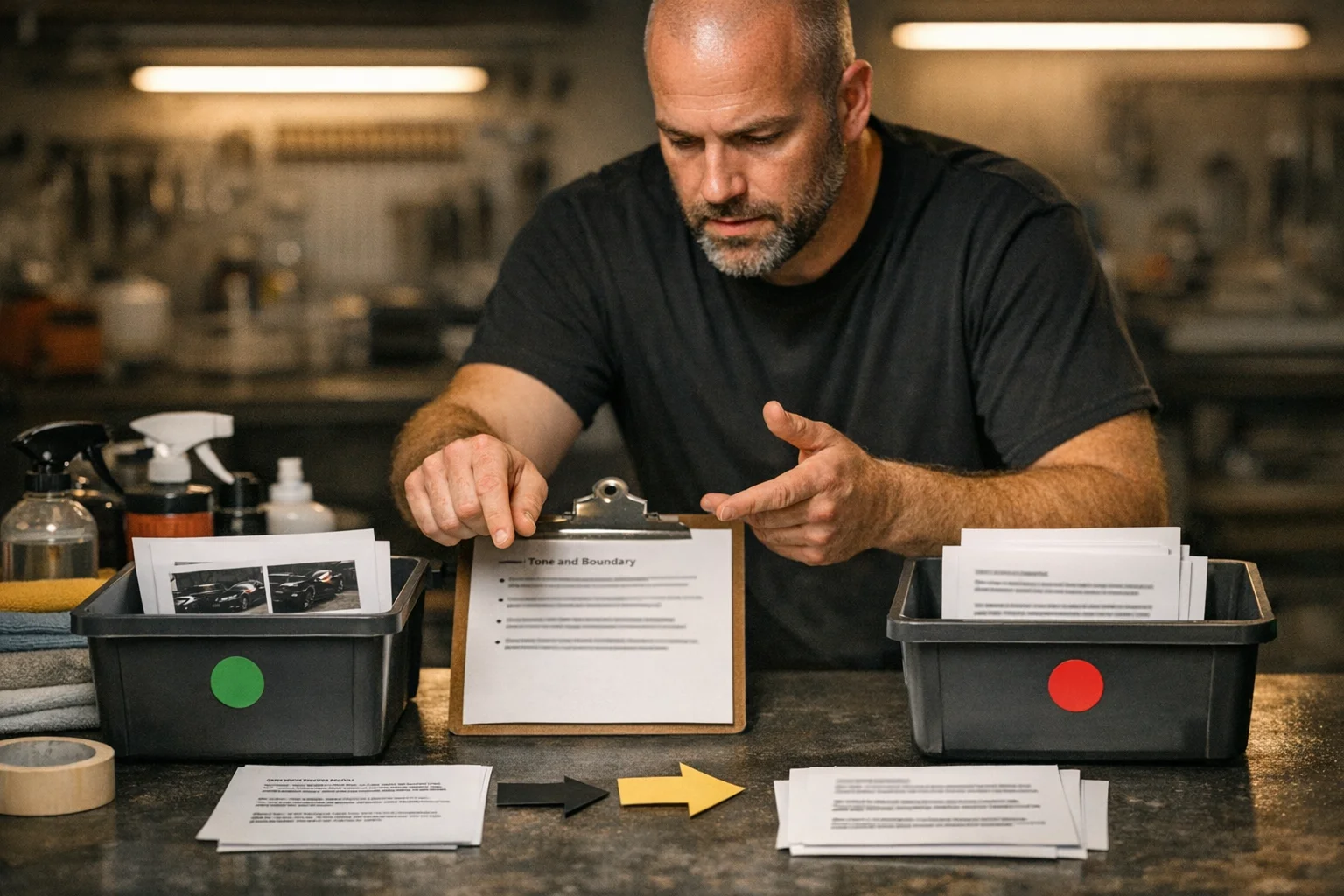
Step one: choose one theme for the week — an expectation-setting message, a simple process step, or a proof point drawn from real customer feedback. Step two: write one message in normal brand voice — the same voice applied to comment replies and review responses. Step three: add one boundary if the topic could be misunderstood — timing, inclusions, service area, or limits. Step four: prepare two consistent reply lines before publishing — one for the most predictable price or availability question, and one for the most likely scepticism or complaint. Step five: publish only during a window when someone can cover replies for at least the first hour after the video goes live.
One message plus one boundary, supported by repeatable replies, prevents public contradictions. Fewer contradictions protect trust — and protected trust supports steadier, more reliable visibility than any individual high-TikTok views moment that the business cannot operationally support with consistent reply behaviour.
Comparison: Chasing TikTok Views vs Consistent Brand Management
Chasing TikTok views optimises for attention today — new hooks, new tones, new offers, and frequent format changes designed to catch the algorithm’s current preference. Consistent brand management optimises for trust that compounds: stable tone, stable expectations, and stable response standards that make every future video easier to believe and easier to act on because the brand record already demonstrates reliability.
View-chasing creates spikes and message drift — individual high-reach moments followed by the confused comment threads that form when the audience cannot predict what the business actually offers or how it will respond to questions. Consistent brand management creates a compounding public record where each video reinforces the same promise, each reply uses the same boundary language, and the review record reflects the same professionalism that the content was designed to project.
For an authoritative overview of how consistent brand content builds local visibility and trust, see Google Business Profile — How to improve your local ranking on Google.

Where a Set-Once Done-For-You System Supports TikTok Consistency
Many founders want consistent short-form video publishing and consistent public replies without manually creating content briefs for every video, monitoring every comment thread during the first hour after publishing, or rebuilding the offer terms document every time a new promotion goes live.
Consider two scenarios. A UK-based local plumbing company creates a short-form video implying same-day emergency availability — the video generates strong early views, but the team is on jobs during the first-hour comment window. Availability and service-area questions go unanswered for three hours, then receive slightly different replies from two different staff members. The resulting thread is referenced in two subsequent reviews that mention confusion about service coverage. After introducing a first-hour reply coverage rule and two pre-written reply lines, the comment thread quality improves immediately and the coverage confusion stops appearing in the review record.
A Canadian multi-location restaurant group runs a promotion video from one location that generates strong TikTok views, but a second location’s manager replies with different terms in the comment thread. Customers compare the two replies and leave comments about inconsistency across locations. After introducing one centralised offer terms brief with two approved reply lines per promotion, all location managers apply the same boundary language and the cross-location comparison threads disappear from the public record.
Tinda AI (https://tinda.ai/) is positioned as a “Trusted Identity Nurturing Digital Assistant” and a “set once, done-for-you brand management system for social media.” After a one-time setup, Tinda AI extracts brand identity, tone, and positioning from the business website; creates consistent social media content including text, images, and short-form video; publishes across platforms automatically; responds to Facebook and Instagram comments; responds to Google reviews with brand-safe replies; repurposes Google reviews into social media posts; and provides insights to improve brand trust and visibility.
For more information on relevant features, see:
- Tinda AI – Short Form Video Automation
- Tinda AI – Automatic Comment Responder
- Tinda AI – Google Review Automation
FAQ
What are TikTok views and what do they mean for a small business?
TikTok views are the number of times a video is watched on the platform — a visibility signal that shows how many people the content reached but does not indicate whether those viewers understood the offer, trusted the business, or felt confident enough to enquire. For a small business, the number that matters is not the view count but the conversion rate from view to enquiry — and that rate depends on clarity, consistent reply behaviour, and a review record that reinforces the same standards the content was designed to project.
Why do TikTok views drop after a strong first week?
TikTok views often drop after a strong first week when the comment thread beneath the high-reach video shows unclear boundaries or inconsistent replies that signal to the algorithm and to future viewers that the content is not generating the quality engagement that warrants continued distribution. The most reliable way to maintain steady visibility is to keep message, tone, and reply behaviour consistent across videos so the account produces a compounding trust signal rather than individual spikes followed by the engagement drops that follow confused or poorly managed comment threads.
How can a small business increase TikTok views without chasing trends?
A small business increases TikTok views sustainably by focusing on repeatable themes — expectation-setting, simple process steps, and proof drawn from real customer feedback — rather than on trend adoption that requires abandoning the brand voice or the clarity standards that make the content actionable. Consistent themes, consistent tone, and consistent reply behaviour produce a compounding account record that attracts higher-intent viewers over time, which is a more valuable outcome than individual trend-driven view spikes that bring an audience the business cannot serve or retain.
How fast should a business reply to protect TikTok views and trust?
Reply speed matters most in the first hour after publishing because that window produces the most clarifying questions and the most visible social proof signals. When questions are answered quickly and consistently during that period, the thread stays coherent and future prospects reading it experience a brand that is attentive and managed. If the team cannot cover the first-hour window at the planned publishing time, the right response is to shift the publishing time rather than to post and reply sporadically — because a well-managed comment thread under a moderately performing video produces better trust outcomes than an unmanaged thread under a high-reach one.
How do TikTok views connect to reputation management?
TikTok views connect to reputation management because the comment threads that high-reach videos generate become part of the same public brand record that prospects evaluate alongside review responses and website content. Customers who feel misled by a video’s implied offer — or who see inconsistent replies in the comment thread — carry that mismatch into review behaviour. The “not as advertised” and “different from what the video suggested” review patterns frequently trace back to short-form content governance failures rather than service failures, making comment thread consistency as important to reputation management as the quality of the video content itself.
Conclusion
TikTok views are a useful visibility signal — but they become fragile when brand voice drifts between videos, offer boundaries are missing from captions, replies vary across staff members and comment threads, and the review record falls out of alignment with the content that generated the reach.
When every short-form video carries one clear message and one visible boundary where needed, theme and tone are consistent across the posting history, comment replies reuse approved language during the first-hour coverage window, offer terms stay stable across campaign periods, posting cadence is sustainable rather than burst-driven, and review governance is included as part of the content workflow, the public record reflects a business that is consistent, attentive, and trustworthy across every touchpoint a prospect evaluates before making contact.
For small business owners and founders in the US, UK, and Canada, that consistency is what separates a short-form video strategy that builds predictable trust from one that generates high TikTok views and low conversion — because the comment threads and review record tell a different story than the content itself. The fix is not better video production. It is better governance applied before publishing: one message, one boundary, two reply lines, and first-hour coverage. Governed repeatability is what makes every video work harder for the brand rather than against it.